
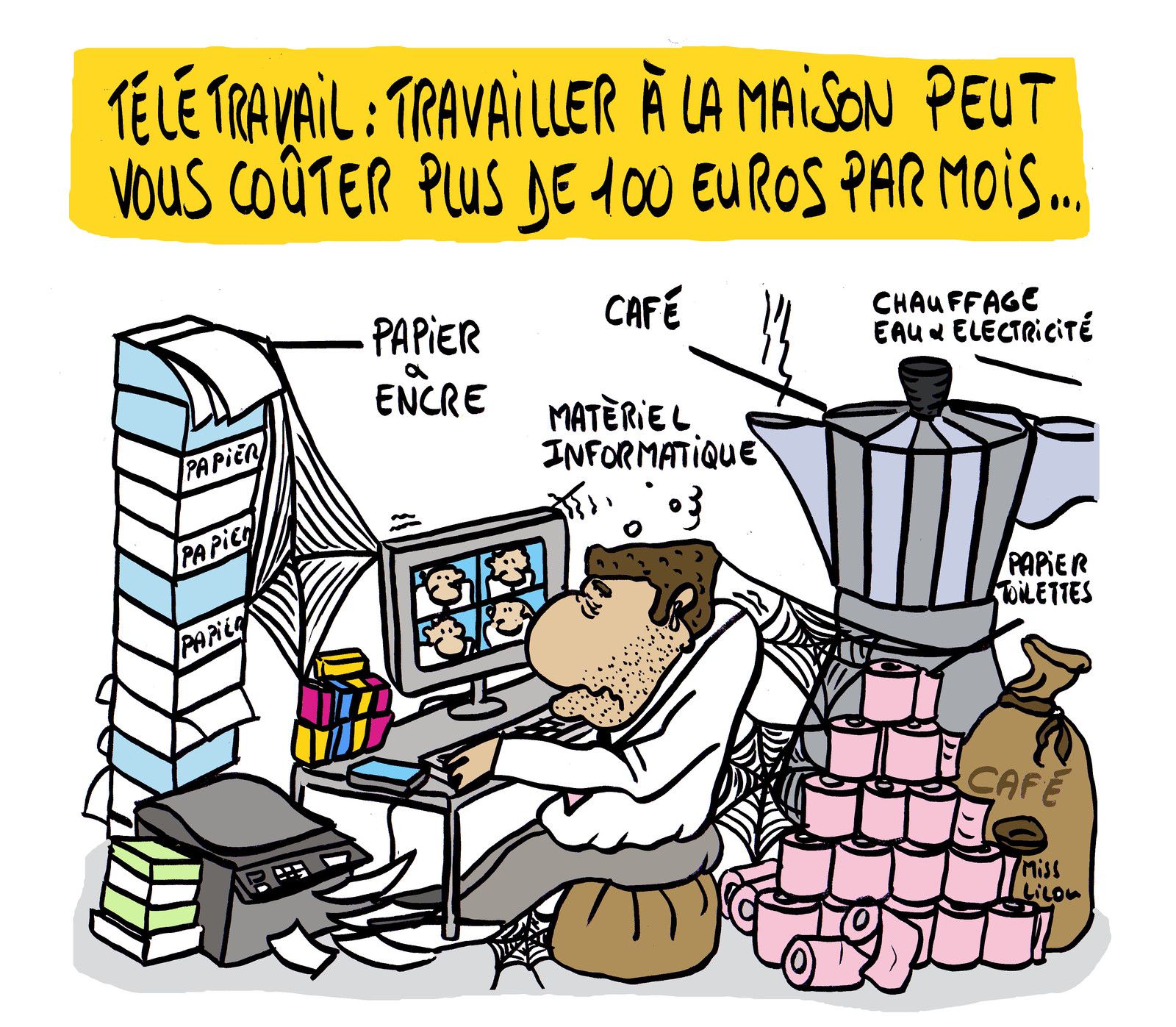
The pandemic forced companies to use telework for eligible functions. It should be noted, by the way, that remote working had long been encouraged by legislative texts. This telework shift was not prepared and was implemented as a matter of urgency.
Without transition and preparation, employees continue their tasks from home. Hence, teleworkers not only use legal working hours but also part of their non-working hours to finish their duties and achieve their objectives, to the extent of becoming workaholics. Even worse, the hours worked outside the legal time in the contracts are neither measured nor paid. And tele-employees are threatened by health issues such as burnout.
The bad and the ugly
However, managers do not adapt their expectations of employees to the new circumstances. They proved that they had no idea about how to manage remote workers.
These managers, lacking skills or experience in managing remote workers, tend to suspect their teleworkers are doing the wrong thing. They multiply contacts by phone, video, and email to ensure that their colleagues are doing the right thing.
Objectives and priorities were not clear. Offline time was not defined. Those managers utter aside: Aren't they quite easy at home? It is a fair return of things. In short, it is managing as a slave driver. Asking colleagues to report every hour of task or every day's task is called micromanaging. This kind of management is the bully approach to the art of managing. It is obviously a bad and ugly management.
The good
Managers need to clarify priorities and deprioritize work that is not essential or realistic under the current circumstances. They must agree with their colleagues on a common system to signal availability for work and recognize that offline time is needed.
It is proven that the best method for managing telecommuting personnel is through a process called Management by Results. Both managers and employees must identify objectives, tasks, and milestones that are achievable.
A good manager trusts his or her colleagues and does not ask for daily reporting of what they do. He or she focuses on goals, objectives, results, and outputs rather than on process or workflows. He or she talks about accomplishments, not about how they are accomplished. He or she agrees with his or her colleagues on a common productivity measurement, identifies with his or her team objectives, tasks, and milestones, while allowing the personnel the flexibility and autonomy without continuously checking the progress.
In the spirit of times
Thanks to technology, the Command-And-Control method of management is no longer an effective management style. Workers becoming knowledge workers, then learning workers, need more and more autonomy and flexibility.
Information and communications technology has allowed both employees and corporations to prune commuting time. And it is proven that giving people more flexibility boosts health, well-being, and productivity. Technology is what spawned this generation of workers, autonomy, and flexibility: leitmotif of the new style of management.
Nowadays, working nine to five is becoming indeed weird. More and more firms allow their staff to do their job at the times and locations that suit their lives. There is no way around that.